ACL 2026 | FreedomAI, CUHK-शेनझेन और वुहान विश्वविद्यालय ने EasyMED पेश किया: AI मानकीकृत रोगी मानव अभिनेताओं जितना प्रभावी शिक्षण देते हैं, प्रति सत्र लगभग 1/73 लागत पर
यह लेख अभी हिन्दी में उपलब्ध नहीं है। नीचे अंग्रेज़ी संस्करण दिया गया है।
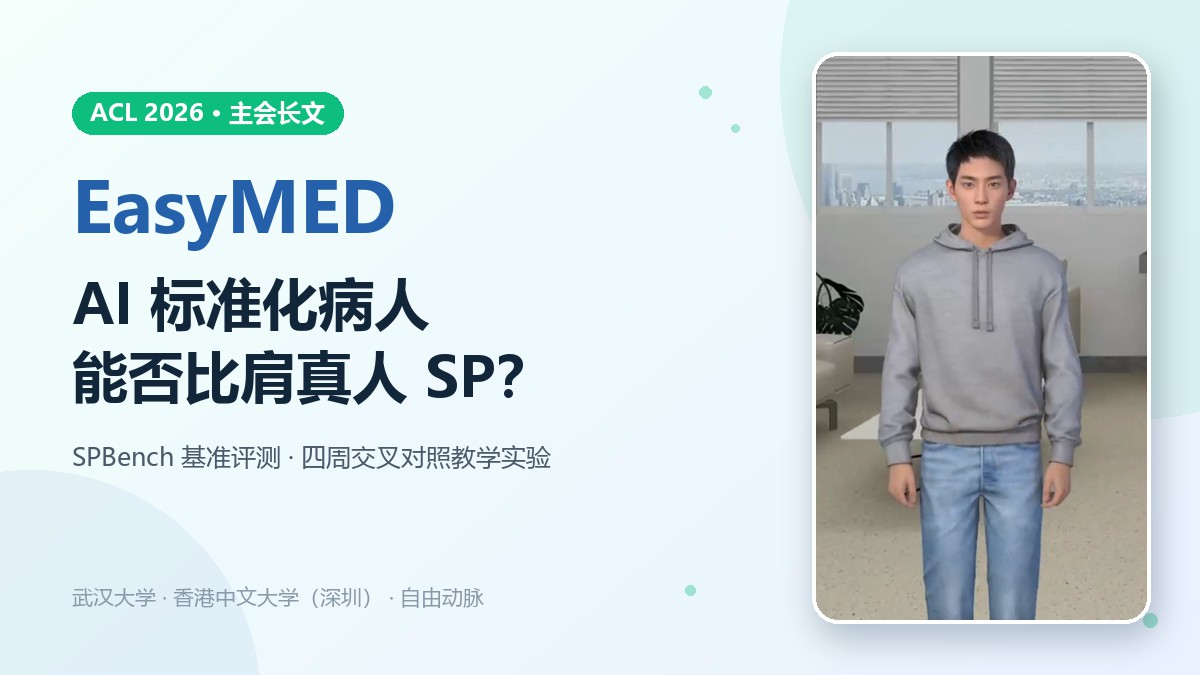
A medical student's first "patient" is often not on a ward but in a simulated consulting room: sitting opposite is a specially trained actor who can portray a particular case consistently, known as a standardized patient (SP). SPs are considered the "gold standard" for teaching history taking, communication and clinical reasoning, and are especially important in objective structured clinical examinations (OSCEs). But human SPs must be recruited, trained and scheduled, which is costly and hard to scale, so students get only limited chances to practice.
Having a large language model (LLM) play the patient seems a natural fit. Yet existing virtual patients are often "too forthcoming": they reveal key history before the student asks, contradict themselves as the conversation goes on, and cannot say afterwards what the student failed to ask. More importantly, there has been no rigorous comparison under equal conditions of whether AI patients can match the training effect of human SPs.
To address these problems, researchers from the School of Artificial Intelligence at Wuhan University, The Chinese University of Hong Kong, Shenzhen and FreedomAI (Freedom AI) propose EasyMED, a multi-agent virtual standardized patient framework, and SPBench, an evaluation benchmark, and ran a four-week controlled teaching experiment against human SPs. The paper has been accepted as a long paper at the ACL 2026 main conference, the 64th Annual Meeting of the Association for Computational Linguistics. FreedomAI full-time employee Lei Zhou is the paper's fourth author and was responsible for developing parts of the system, liaising with users and deployment; FreedomAI intern Bingquan Zhang is a co-first author.
Paper: Human or LLM as Standardized Patients? A Comparative Study in Medical Education
Link: https://aclanthology.org/2026.acl-long.1243/
arXiv: https://arxiv.org/abs/2511.14783
Code / data: https://github.com/FreedomIntelligence/EasyMED
Authors: Bingquan Zhang*, Xiaoxiao Liu*, Yuchi Wang, Lei Zhou, Qianqian Xie†, Benyou Wang† (* co-first authors, † corresponding authors)
Affiliations: School of Artificial Intelligence, Wuhan University; The Chinese University of Hong Kong, Shenzhen; FreedomAI (Freedom AI)
Background: human SPs are hard to scale, and AI patients aren't realistic enough
The paper sets out three requirements a virtual standardized patient (VSP) must meet to be truly useful for teaching:
- Patient fidelity: behavior and answers comparable to a human SP;
- Interaction coherence: the case stays consistent across a multi-turn conversation, and information is given only when asked for;
- Pedagogical awareness: understanding the student's learning goals and questioning process, and giving fine-grained teaching feedback.
Against these three requirements, the paper compares existing systems such as SimPatient, EvoPatient, CureFun, Adaptive-VP and MedSimAI. Most rely on a single model to understand questions and generate answers "end to end", which makes them prone to revealing information too early and contradicting themselves. Their evaluations also mostly rely on interviews and questionnaires, without quantitative comparisons or long-term controlled studies against human SPs.
Method: separate "understanding the question" from "how to answer"
EasyMED hands a simulated consultation to several agents with clearly divided roles, in two phases: "consultation" and "evaluation".
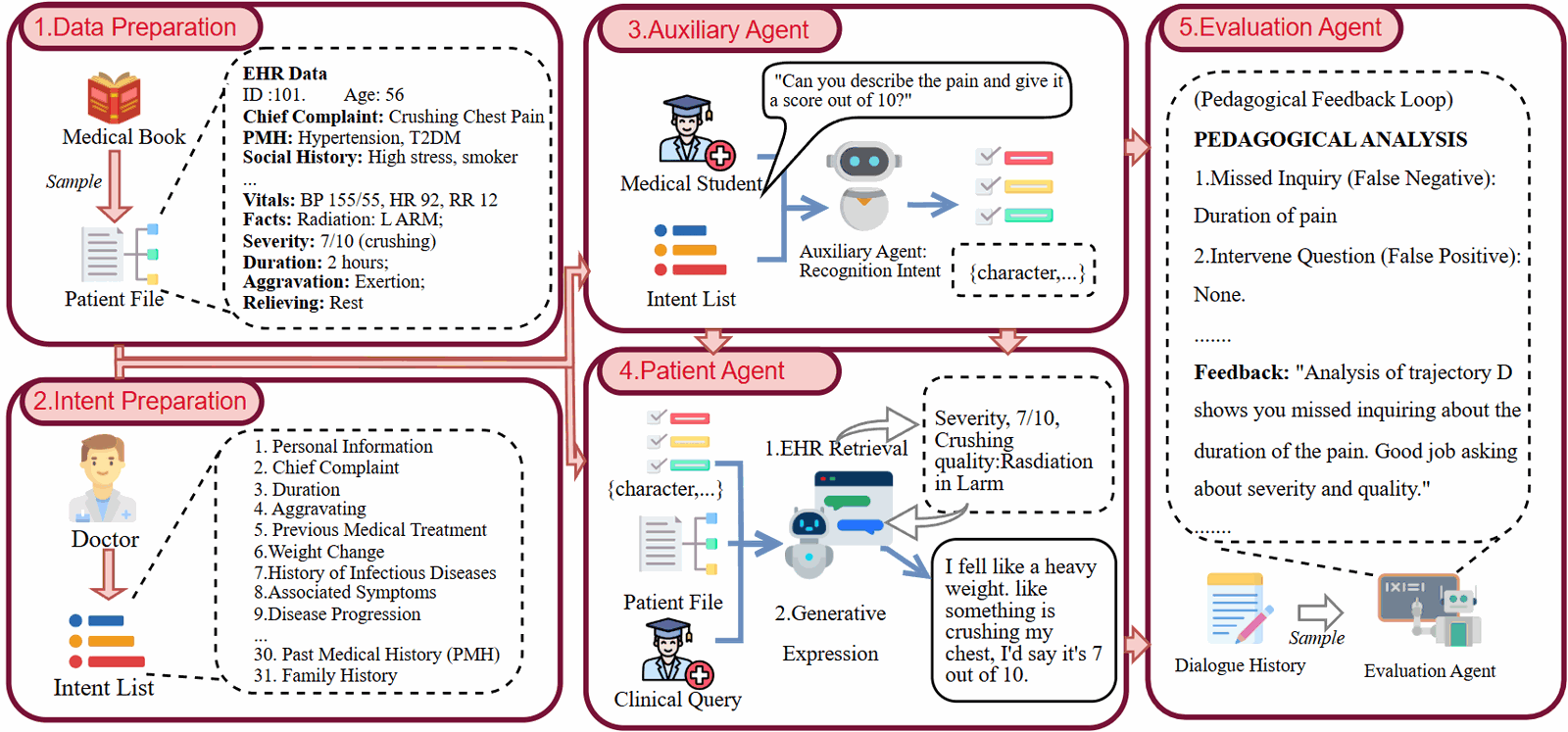 Figure 1: EasyMED's multi-agent framework. In the consultation phase the auxiliary agent (intent recognition) works with the patient agent; afterwards the evaluation agent gives teaching feedback (source: the paper)
The auxiliary agent first works out what the student is asking. For each question, it assigns the question to a predefined clinical history-taking intent, such as "chief complaint" or "time of onset", without getting caught up in the exact wording. The paper defines 31 history-taking intents in 7 categories. To choose the intent recognition model, the team built a test set of 4,631 clinical questions; Gemini 2.5 Flash performed best of six candidates, with 96.3% accuracy and a 95.0% macro-averaged F1, and was chosen as EasyMED's intent recognition model.
The patient agent then decides what to say and how to say it. Given the intent, it first retrieves the corresponding fact from a structured medical record, then answers conversationally in line with a preset personality (such as anxious or hesitant). Handling "what to say" and "how to say it" separately means information is given only when asked for, with no early "spoilers", while the conversation still feels natural.
The evaluation agent reviews the session afterwards. It does not interrupt the consultation; at the end it reviews the whole conversation, compares the recognized intents and information obtained item by item against a case checklist written by experts, points out missed and unnecessary questions, and produces structured feedback. In a blind review of feedback from 60 practice sessions by two clinical experts, 87% of the feedback was rated appropriate by both (4 or above on a 5-point scale), with an inter-rater agreement (Cohen's κ) of 0.76.
In the experiments, the patient and evaluation agents were built on Gemini 2.5 Pro, and the auxiliary agent used Gemini 2.5 Flash. The system used in the teaching experiment also has interfaces for physical examination, investigations, diagnosis and assessment.
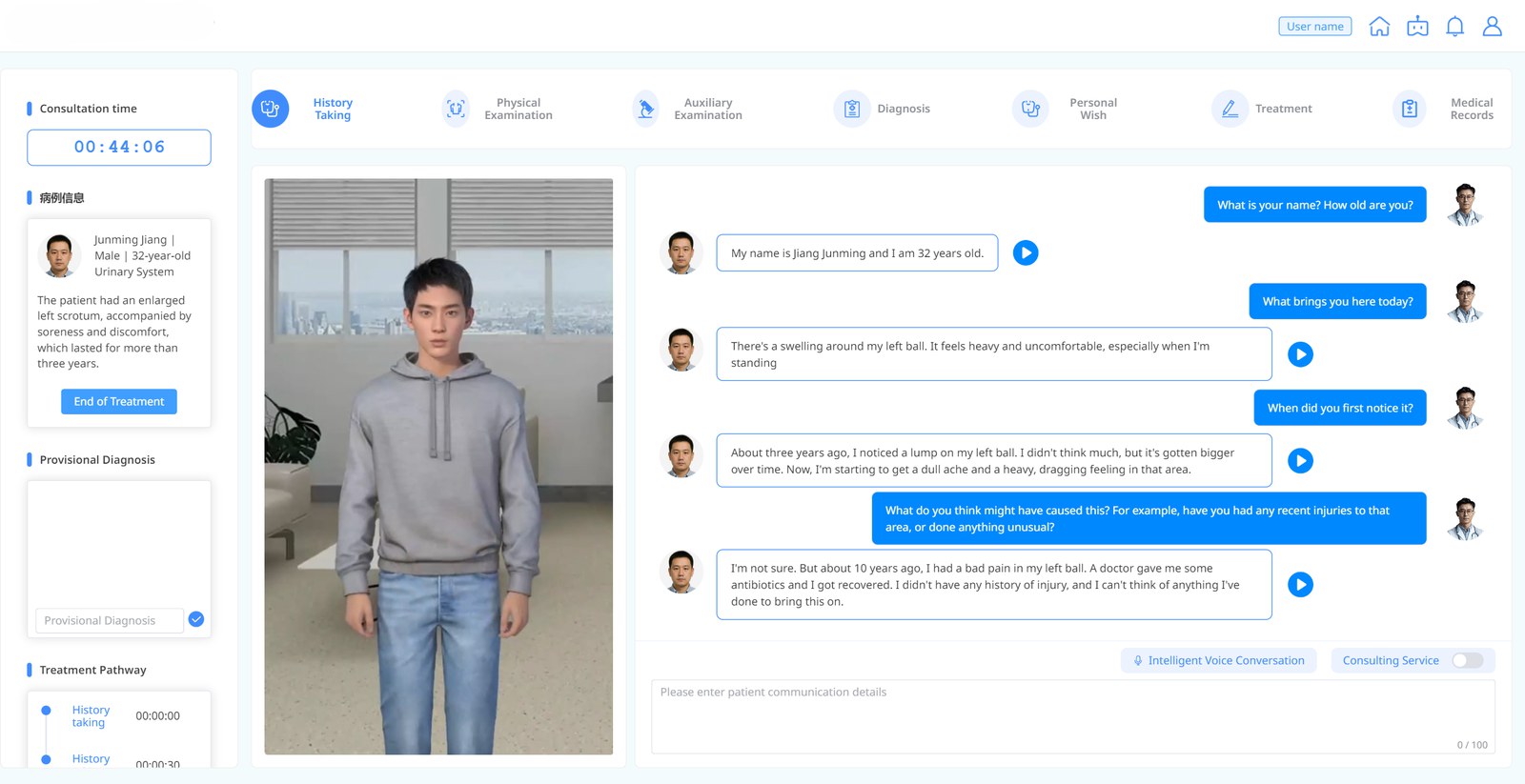 Figure 2: EasyMED's consultation interface, with case information and controls on the left, a 3D virtual patient in the middle and the conversation on the right (source: paper appendix)
SPBench: using human SP conversations as the reference
To judge whether an AI patient behaves like a human, you first need a yardstick based on humans. SPBench is built from two widely used standardized patient training textbooks. It collects 3,208 question–answer pairs from real doctor–patient consultations, organized into 58 cases across 14 medical specialties. Each case contains a patient profile and the turn-by-turn transcript of a human SP, reviewed by two clinical experts.
During evaluation, the sequence of questions a real doctor asked in each case is fed verbatim to every system, so all virtual patients face exactly the same questions. Answers are scored on 8 dimensions defined by the researchers together with three clinical experts: question comprehension (QC), case consistency (CC), controlled disclosure (CD), response completeness (RC), logical coherence (LC), language naturalness (LN), conversational consistency (CS) and patient demeanor (PD). Each dimension is scored on a 5-point scale and converted to a 100-point scale, with GPT-4o as the automatic judge; on 86 randomly sampled examples, the automatic scores had a Pearson correlation of 0.81 with blind ratings by two clinical experts.
Experiment 1: on SPBench, EasyMED comes closest to human SPs
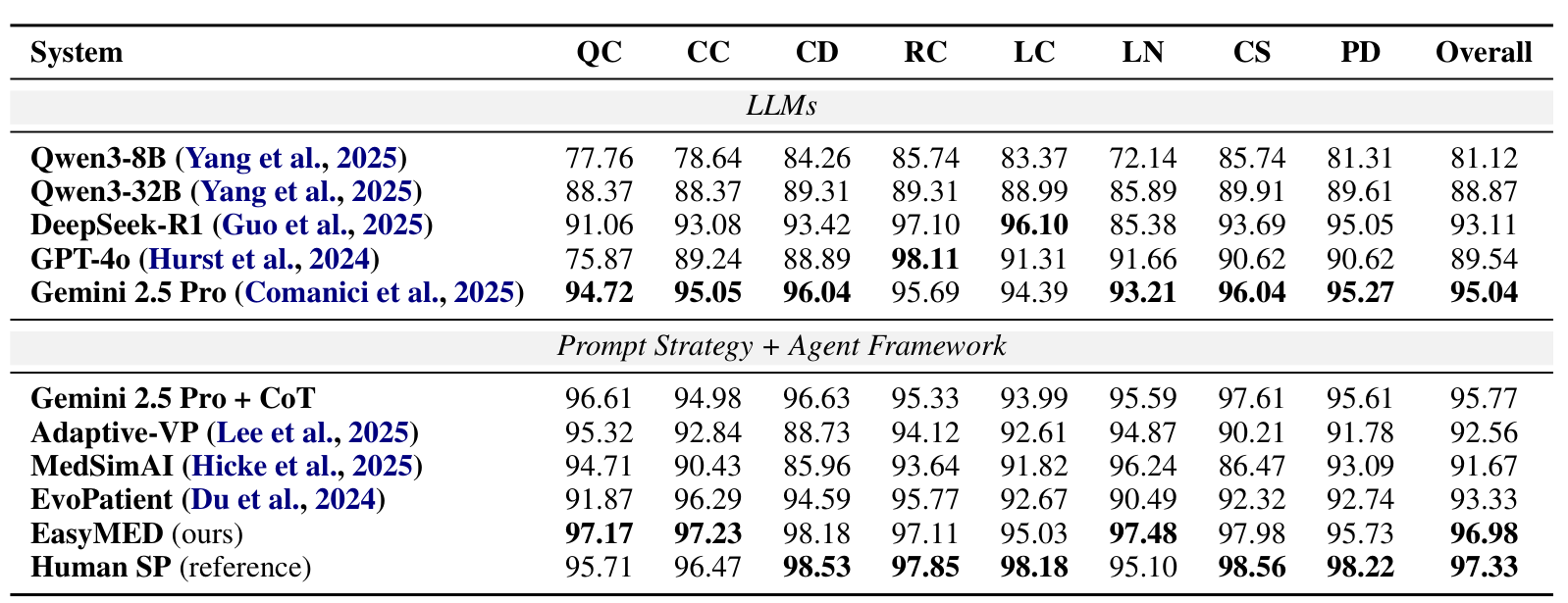 Figure 3: SPBench results by dimension and overall; the last row is the reference for human standardized patients (source: Table 3 of the paper, ACL 2026 camera-ready version)
Human SPs score 97.33 overall, and EasyMED follows closely at 96.98, the highest of all LLM-based systems. EvoPatient, Adaptive-VP and MedSimAI, also designed as virtual patients, score 93.33, 92.56 and 91.67 respectively. Among general-purpose models used directly, the best, Gemini 2.5 Pro, scores 95.04, rising to 95.77 with chain-of-thought (CoT) prompting.
By dimension, EasyMED's controlled disclosure score of 98.18 is very close to the human SPs' 98.53, and on question comprehension, case consistency and language naturalness EasyMED even scores slightly above the human SP reference. The paper also observes that Adaptive-VP is weaker on controlled disclosure (88.73), while MedSimAI sounds natural (96.24) but is weaker on conversational consistency (86.47). The authors conclude that prompting mainly affects "how to say it", while stable patient behavior depends more on information control at the architecture level.
Experiment 2: four weeks of controlled teaching, with learning outcomes on par with human SPs
SPBench measures "how lifelike"; what matters in teaching is "how useful". The team recruited 20 fourth- and fifth-year undergraduate medical students at The Chinese University of Hong Kong, Shenzhen. Before grouping, 6 were excluded under predefined criteria (4 could not attend in-person training because of schedule conflicts and 2 had pre-test scores that were too high), leaving 14 students (7 men and 7 women) in the experiment.
The experiment used a crossover design: group A used EasyMED for the first two weeks and then switched to human SPs, while group B did the reverse; three experienced professionals served as human SPs. Students took an OSCE at the pre-test, mid-test and post-test, each using different cases of equal difficulty, scored independently by two examiners who did not know the group assignments.
| Group (training order) | Pre-test | Mid-test | Post-test | Total gain over four weeks |
|---|---|---|---|---|
| Group A (EasyMED → human SP) | 70.56 | 86.07 | 87.44 | +16.89 |
| Group B (human SP → EasyMED) | 69.84 | 82.01 | 85.20 | +15.36 |
The two groups started from statistically similar baselines (t(12) = 0.16, p = 0.88). After four weeks, group A improved by 16.89 points on average and group B by 15.36 points (data from Table 5 of the paper, 7 students per group), from which the paper concludes that EasyMED supports the acquisition of clinical skills as well as training with human SPs. Most of the improvement came in the first two weeks: group A, using EasyMED in the first phase, gained 15.51 points, and group B, using human SPs, gained 12.17 points; after switching, both groups' gains slowed markedly (1.37 and 3.19 points respectively).
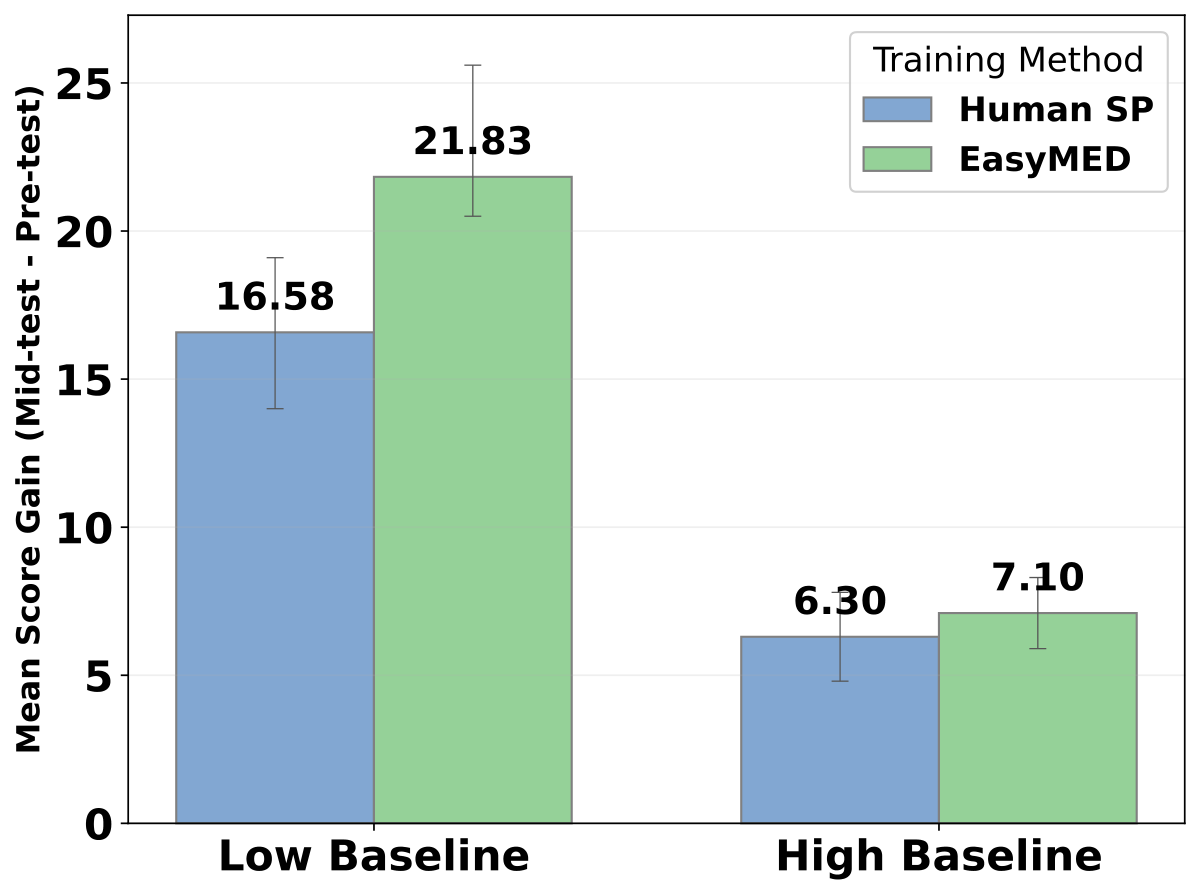 Figure 4: Average score gain in phase 1 (the first two weeks) for students with different baselines; blue is human SPs and green is EasyMED (source: the paper)
Splitting students by pre-test score into a stronger group (top 3) and a weaker group (bottom 4) makes the difference clearer: weaker students improved by 21.83 points on average with EasyMED versus 16.58 with human SPs, while stronger students improved less with either (7.10 vs 6.30 points). The paper concludes that EasyMED is especially effective for novices early in their training.
Bolder questions, practice any time, lower cost
Students rated the realism of EasyMED's conversations at 4.6 on average (out of 5), and its help with learning at 4.5, close to the 4.7 for human SPs. Their learning anxiety with EasyMED was significantly lower than with human SPs (0.5 vs 3.2, lower is better, p < .01); they reported worrying less about making mistakes and being more willing to try exploratory or repeated questions.
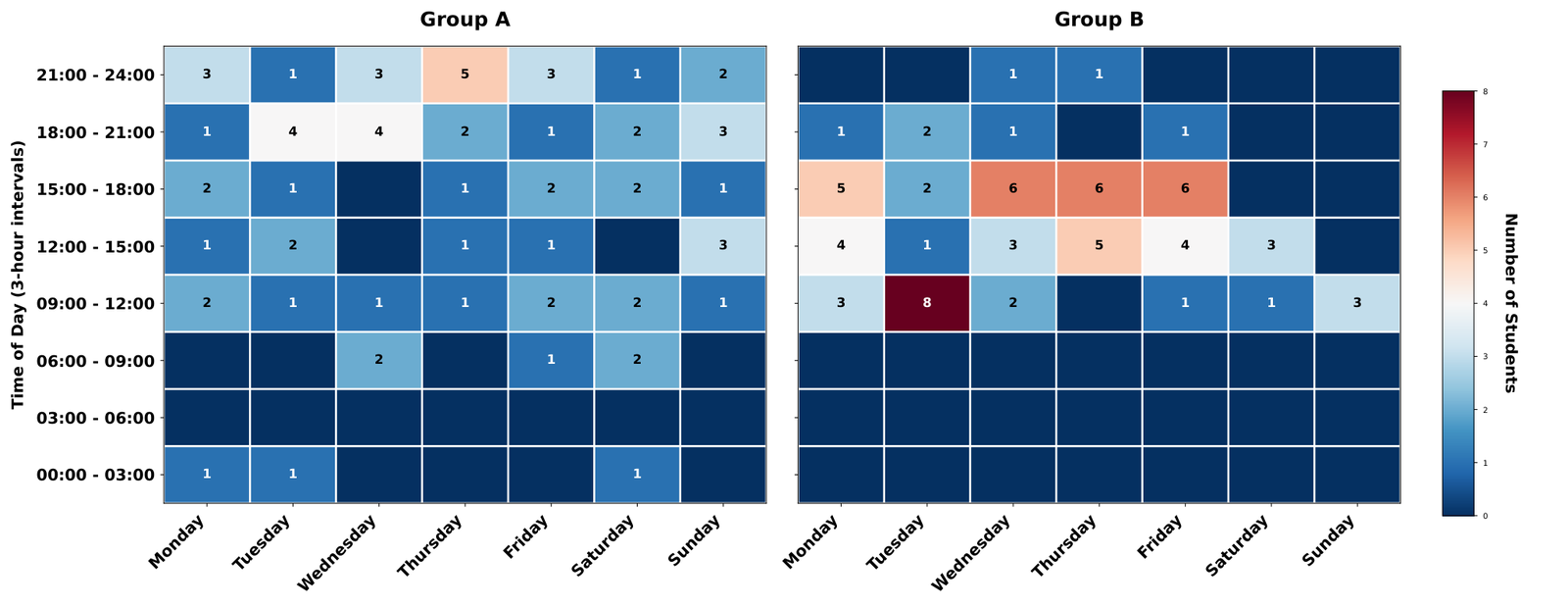 Figure 5: Weekly distribution of practice sessions, EasyMED group on the left and human SP group on the right; the numbers are how many students practiced in each time slot (source: the paper)
System logs show that EasyMED practice was spread across all times of day, including evenings and weekends, while human SP practice was concentrated in weekday working hours. An average EasyMED session lasted 54 turns and 28 minutes 49 seconds, versus 47 turns and 15 minutes 17 seconds with human SPs. The paper notes that text-based interaction may itself lengthen sessions, but the larger number of turns suggests students probed more thoroughly.
The cost gap is even clearer: based on the tokens used in a complete session, one EasyMED session costs about US$0.725; at the standard hourly rate for human SPs, one session costs about US$52.95, a difference of about 73 times.
Significance and limitations
The paper does not conclude that "AI replaces human SPs". Rather, it finds that LLM-based multi-agent virtual standardized patients can be a practical, scalable complement to traditional SP programs, letting students practice history taking at any time, under low pressure and as often as they like.
The authors also list the limitations: the experiment took place at a single school with a small sample of students from similar backgrounds; EasyMED currently supports only text interaction and lacks non-verbal and multimodal cues such as facial expression and tone; and although the automatic scores correlate highly with expert scores, they may still miss subtleties in conversation quality and learning behavior. Next steps include larger multi-center, long-term studies, multimodal interaction and further refinement of the evaluation metrics.
In the same direction, another study by Benyou Wang and collaborators, "It Talks Like a Patient, But Feels Different" (a CHI 2026 poster, with Bingquan Zhang among the authors), interviewed 12 medical students in their clinical years and ran three co-design workshops. It found that what drives learners' trust and engagement is not only whether the conversation is lifelike, but whether it works well for teaching.
EasyMED's agent modules, SPBench's evaluation scripts and the case data are all open source on GitHub.
The team
This work is a collaboration between the School of Artificial Intelligence at Wuhan University, The Chinese University of Hong Kong, Shenzhen and FreedomAI.
Lei Zhou | FreedomAI full-time employee, fourth author
In the EasyMED project, Lei Zhou was responsible for developing parts of the system, liaising with users and deploying the system. His affiliation on the paper is FreedomAI (Freedom AI).
Other authors
- Bingquan Zhang: co-first author and FreedomAI intern, affiliated with the School of Artificial Intelligence at Wuhan University, The Chinese University of Hong Kong, Shenzhen and FreedomAI; also one of the authors of the CHI 2026 co-design study mentioned above.
- Benyou Wang: one of the corresponding authors, FreedomAI Chief AI Scientist, assistant professor and doctoral supervisor at the School of Data Science, The Chinese University of Hong Kong, Shenzhen.
- Other authors: Xiaoxiao Liu (co-first author) and Yuchi Wang are from The Chinese University of Hong Kong, Shenzhen, and Qianqian Xie (one of the corresponding authors) is from the School of Artificial Intelligence at Wuhan University.